

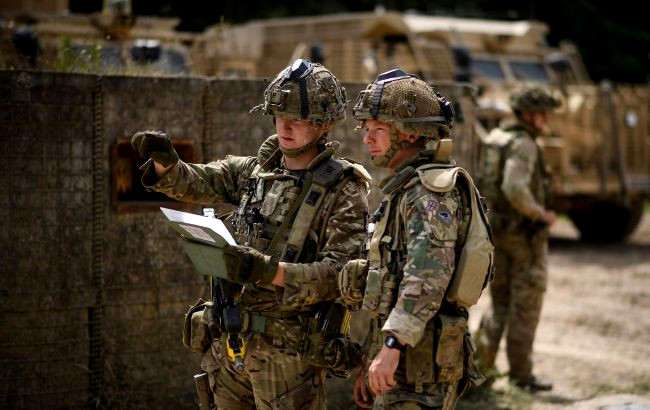
Today, April 4, a military delegation from the "Coalition of the Willing" arrives in Ukraine. This group consists of representatives from European nations ready to provide military assistance in the future.
RBK-Ukraine reports on what to expect from this visit and the topics to be discussed with European military officials beyond the deployment of troops.
A select group, including representatives from France and the UK, is visiting Kyiv, as noted by President Volodymyr Zelensky on April 1.
Previously, French President Emmanuel Macron, the brain behind this initiative, emphasized that it concerns so-called "support forces" that could be deployed after a ceasefire is achieved.
"These 'support forces' should not replace peacekeeping troops or the strong Ukrainian army," Macron stated on March 26. The mission entails a long-term presence in strategic locations within Ukraine, coordinated with Kyiv. The primary goal of the contingent is to deter potential aggression from Russia.
Zelensky mentioned that discussions will cover not only the presence of the contingent but also the future development of the Ukrainian armed forces and their role in ensuring European security. "It is crucial how the future of the Ukrainian army will look as part of the continent's security," he added.
Macron also indicated that the delegation should define the future parameters of Ukraine's Armed Forces.
"What army, what naval capabilities, what air force capabilities, what format, including size, number of soldiers, and equipment, is needed to respond to potential Russian aggression?" Macron said on March 27. This information is necessary for European countries to plan their aid and clarify each nation's contributions within the "Coalition of the Willing".
The final format of the mission remains uncertain.
The deployment of troops to Ukraine has been actively discussed for several months at the diplomatic level. A summit of state leaders regarding this issue took place in Paris on March 27.
As RBK-Ukraine reported, various mission formats are still under consideration. The choice of one format or another largely depends on the terms of the ceasefire with Russia, as achieving a ceasefire is a prerequisite for deploying any troops.
Currently, a number of technical and logistical questions can be addressed, said analyst Igor Chalenko.
"There are issues, for example, regarding air cover, such as which European airfields can European aircraft take off from. This all needs to be calculated and worked out—specifically the technical aspects," Chalenko noted.
Furthermore, discussions might involve relocating the training of Ukrainian units from Europe to Ukraine with the participation of European instructors. Ultimately, no such visits are complete without discussions of urgent assistance to Ukraine.
"This is about enhancing support here and now. This visit should be viewed in the context of President Zelensky's statements regarding the possibility of intensifying offensives in three directions: Kharkiv, Sumy, and Zaporizhzhia," Chalenko remarked.
The key issue remains the ability of the United States to compel Russia to cease fire and establish a lasting truce. Without this, discussions about a European mission in Ukraine will remain just that—discussions.
Previously, RBK-Ukraine explained what the "Coalition of the Willing" is and which countries are involved.