

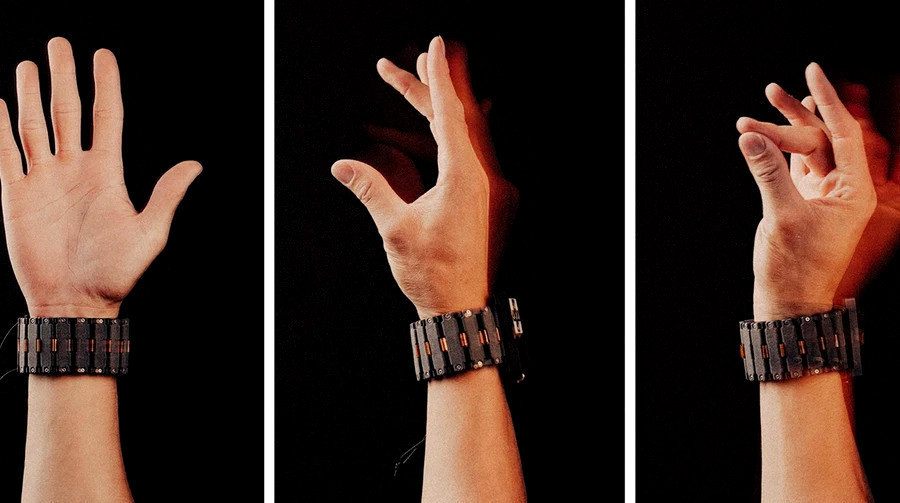
Meta has released a study in Nature detailing the latest iteration of its sEMG-RD bracelet. This device reads electrical signals from muscles through the skin and converts them into digital commands, enabling actions like navigating a computer desktop, moving a cursor, or opening applications. Gizmodo reports on this development.
The new prototype can automatically adapt to different users without the need for extensive training, a limitation of earlier versions. This advancement is made possible by innovative neural network algorithms that quickly analyze signals and create personalized control models.
Developers also showcased the ability to recognize gesture strength, such as how firmly a virtual object is squeezed. This opens up potential for more complex interactions in VR and AR environments. Additionally, the device can now read handwritten text at a speed of 20.9 words per minute.
Meta has been working on such interfaces since 2021. The current version of the bracelet stands out as one of the company's most promising developments in alternative control methods that do not rely on cameras or physical controllers. This solution could prove beneficial for users with disabilities.
