

In a school in Espoo, Finland, an 11-year-old girl of Ukrainian descent was compelled to sing the song "Kalinka" during music class. This incident raised the ire of the child's mother and the Ukrainian community, once again highlighting the issue of normalizing the culture of the aggressor state in Finland. This was reported by Yle.
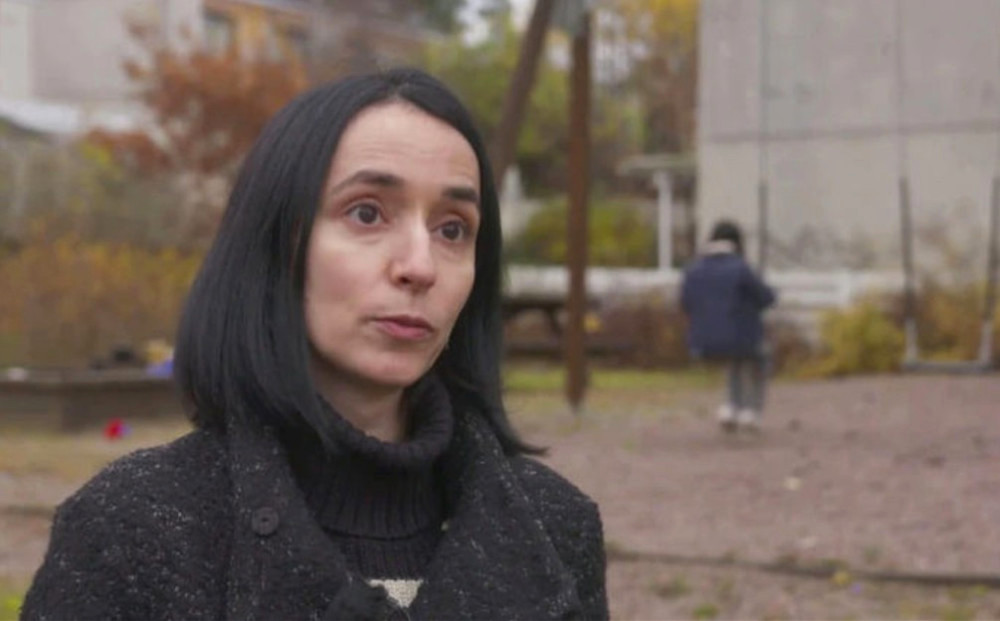
The incident occurred at Storängen school. According to the girl's mother, musician Irina Horkun-Silen, her daughter Nicole, who was born in Finland, told her that during music class, the teacher introduced the class to Russian culture. All students were tasked with singing the song “Kalinka”.
“Nicole explained that she is Ukrainian and does not want to sing in Russian. The teacher responded that “we do not talk about the war in school”, – the report states.
The child understood that failing to complete the assignment would result in a poor grade, so she felt compelled to sing, which became a deeply traumatic experience for her.
“What if there was a Ukrainian child in her place whose parents were killed by Russians?” the mother rhetorically asks.
She also expressed surprise as to why the introduction to world music cultures began specifically with Russian culture, calling it a normalization of the aggressor. The situation is particularly cynical given that the song “Kalinka” gained global fame through performances by the Soviet Army Choir, a powerful symbol of Soviet and now contemporary Russian militaristic ideology.
The principal of the school, Ellinor Hellman, declined to comment on the incident, limiting herself to a formal statement that the school adheres to the national curriculum and that teachers are “encouraged to thoughtfully respond to students' questions, taking into account the needs of the entire group”.
In contrast, the National Agency for Education in Finland acknowledged that certain content can provoke strong emotions in the context of war. Lawyer Heidi Ruonala noted that teachers have pedagogical freedom and flexibility to offer alternative assignments.
This incident turned out to be just the tip of the iceberg of systemic problems faced by Ukrainians in Finland. Vasyl Hutsul, head of the Ukrainian Society in Finland, stated that the community is “deeply saddened” and that this situation raises questions about the appropriateness of promoting Russian culture in schools.
As representatives of the Ukrainian community explain, the issue is much broader: most services for Ukrainian refugees are provided in Russian, there are almost no Finnish language courses with Ukrainian translation, and Ukrainian translators are often replaced with Russian ones.
“Even though Ukrainians understand and can speak Russian, it is traumatic for us, since it is the language of those who are currently killing Ukrainians. This is not obvious for Finns“, – says Horkun-Silen.
Expert from the Culture Fund, Eilina Husatynska, emphasizes that for Ukrainians, the Russian language is not neutral; it is a language of violence, war, and centuries of Russification.
“The Russian language carries historical and symbolic weight, reflecting the legacy of Russification and the erasure of Ukrainian identity. Without this awareness, it is easy to inadvertently reproduce the old colonial model where Ukrainian culture again falls into the shadows of the so-called post-Soviet space“, – she emphasized.