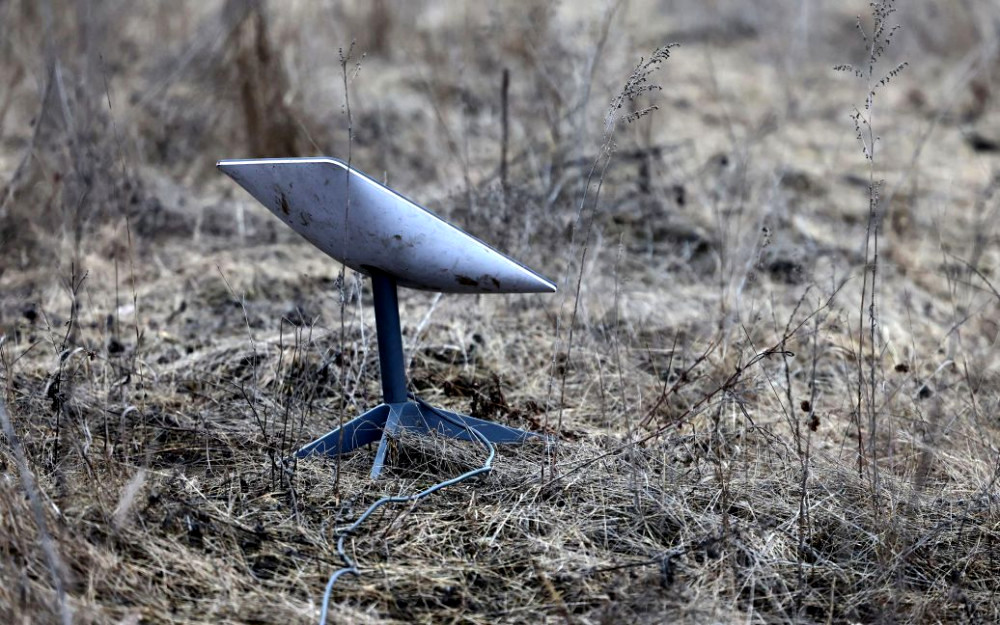

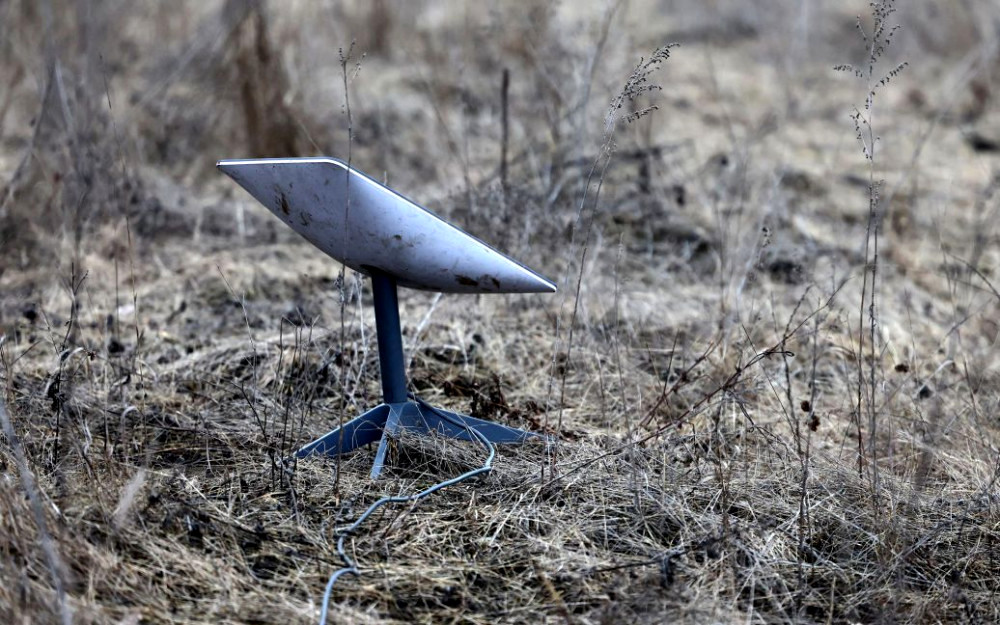
The Starlink satellite internet system from SpaceX has become a vital communication tool on the Ukrainian frontlines, yet its speed has proven inadequate for effectively managing ground robotic complexes (GRCs). This was reported by Space.com.
Over the past year, Ukraine has deployed thousands of GRCs to the front lines, tasked with delivering ammunition, evacuating the wounded, and attacking enemy positions. However, the Starlink terminals installed on these machines provide only about 10 Mbps, leading to poor video quality, complicating remote control, especially during swift movements.
Vadim Burukin, CEO of the Ukrainian drone startup Huless, explained that a video frame rate of at least 30 frames per second is necessary for safe robot operation.
"If you want to move fast, you need a frame rate of at least 30 frames per second to effectively manage the robot. With only 10 frames per second, rapid movements increase the chances of hitting a mine or running into a tree," said Vadim Burukin.
Space.com notes that sources linked to the Ministry of Defense of Ukraine indicate that up to 200,000 Starlink terminals are actively used in the country, making it the largest user of this technology in Europe. However, the high number of devices, especially on the front lines, leads to system overload and reduces the speed of ground robots to about 10 km/h.
Andriy Dovbenko, head of the Ukrainian Tech Exchange business support network, pointed out that at this speed, it takes robots up to two hours to cross a 20 km "gray zone," raising the risk of them being destroyed by Russian FPV drones.
"That’s quite slow for ground robotic complexes. Ideally, their speed should be at least 20 kilometers per hour," emphasized Andriy Dovbenko.
Moreover, Starlink terminals frequently malfunction due to vibrations while traversing uneven terrain. The signal is also degraded by weather conditions and obstacles such as tree canopies.
To address these issues, Ukrainian engineers have developed specialized drones that ascend to heights of up to 150 meters and carry signal relay devices, allowing the communication range between GRCs and operators to extend from a few kilometers to over 40 km. Flying drones equipped with relays can operate even further, up to 80 km from the operator, remaining out of reach of enemy drones.
In addition to technical solutions, Ukrainian developers are working on autonomous navigation systems based on artificial intelligence, enabling combat vehicles to operate without constant operator oversight, thus reducing reliance on Starlink signals.
Despite these limitations, Starlink remains critically important for Ukraine. Andriy Dovbenko emphasized that the technology was not designed for military purposes and has its limitations.
"Starlink has many applications in warfare, but it wasn't specifically engineered as a military technology, so it has its constraints. It would be great to have alternatives. But can we realistically create a large-scale alternative to Starlink? Probably not," said Dovbenko.
Interestingly, the Ukrainian company DevDroid recently created a universal "operating system" called Droid Box for ground drones. According to the company, Droid Box serves as the brain of ground drones, responsible for communication, control, and integration of combat modules.