

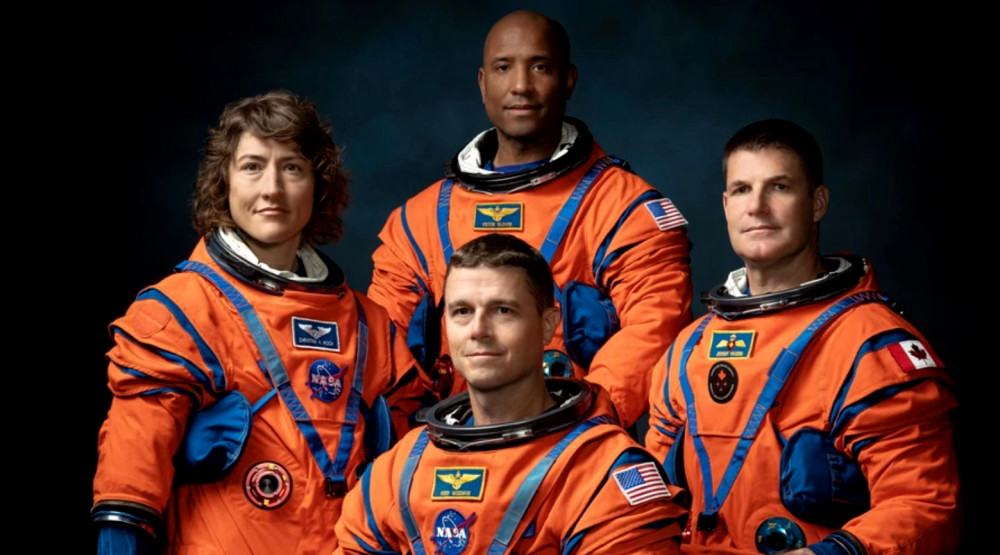
NASA aims for its first crewed mission to the Moon in 50 years to take place in February 2026. Previously, the agency had hoped to launch no later than April 2026, according to BBC reports.
The mission, named Artemis II, will send four astronauts on a ten-day journey around the Moon. This flight is intended to test systems for future landings and ultimately establish a long-term presence on the lunar surface.
Acting NASA Deputy Administrator Lakisha Hawkins stated that this mission is a crucial step in the advancement of space exploration.
"We have the opportunity to witness a historic event from the front row... The launch window could open on February 5, but we want to emphasize that safety is our top priority," Hawkins said.
Charlie Blackwell-Thompson, Artemis launch director, explained that the Space Launch System (SLS) rocket, which will carry the astronauts to the Moon, is already "practically assembled and ready to go." What remains is to finalize the Orion capsule, which will be attached to the SLS, and complete ground tests.
During the Artemis II mission, astronauts Reid Wiseman, Victor Glover, and Christina Koch from NASA, along with Jeremy Hansen from the Canadian Space Agency, will embark on a ten-day journey. They will not land on the Moon but will be the first crew to venture beyond low Earth orbit since Apollo 17 in 1972. This crew will also travel farther into space than anyone in history.
"They will fly at least 5,000 nautical miles (9,200 km) past the Moon, which is significantly farther than previous missions," said Jeff Radigan, the Artemis II flight director.
The crew will participate in an experiment that tracks how space affects their bodies. Scientists will also grow tissue samples from the astronauts' blood, called organoids, both before and after their journey to compare the effects of space.
