

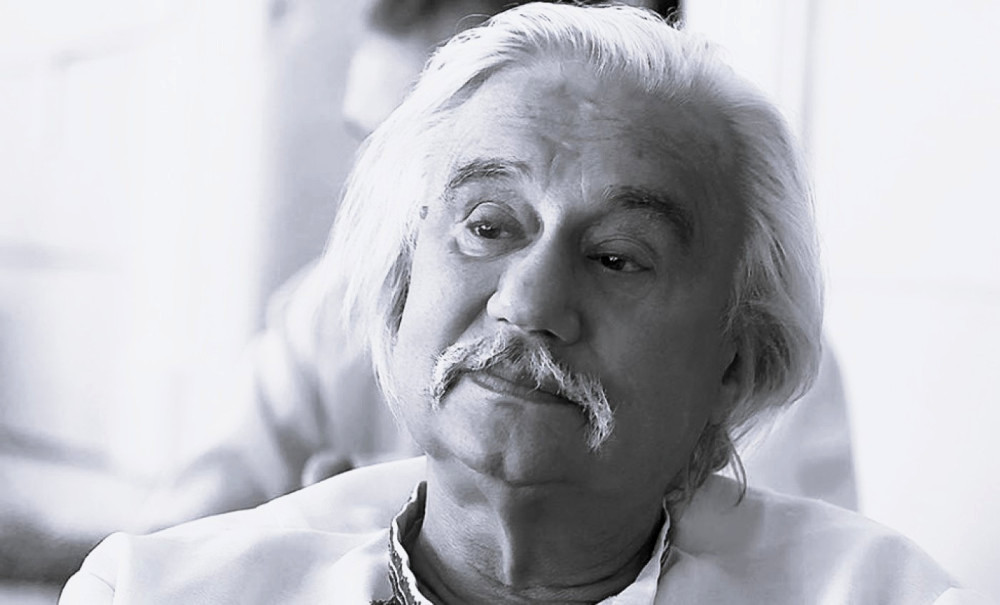
Ihor Kalynets passed away at the age of 86, leaving behind a remarkable legacy as a dissident and writer who made significant contributions to the Ukrainian national movement. He was not only a representative of the sixties generation but also a political prisoner in Soviet labor camps, recognized for his fight for freedom and human rights.
The tragic news was announced by the Mayor of Lviv, Andriy Sadovyi, along with the regional council, which expressed its condolences.
"Ihor was a symbol of the fight for Ukrainian independence. Together with his wife Iryna, they embodied resilience and true intellect," the regional administration stated.
He will be remembered as a person of indomitable spirit and deep sincerity. His light will forever live in our hearts.
Andriy Sadovyi emphasized that Ihor Kalynets and his wife became "the voice of Ukrainian dignity in dark times".
Ihor was born in Khodoriv, Lviv region. From a young age, he witnessed the brutal repressions of the communist regime, yet he studied the works of banned Ukrainian authors, shaping his worldview.
He received education at Lviv University, where he met prominent Ukrainian figures like poet Ivan Drach and literary critic Ivan Dziuba.
For several years, his poems were published in magazines such as "Zmina", "Zhovten'", and "Dnipro", as well as in Czech translations in Prague.
Since 1965, Ihor Kalynets and his wife were under KGB surveillance. He was summoned for explanations regarding his collection "Vohon Kupala" to the regional Communist Party committee.
The poet faced rejection from the Writers' Union, and his subsequent works were censored, forcing him to increase the distribution of his writings through samizdat.
Many of his later collections were published abroad, particularly in Belgium and Germany. Ihor and his wife actively participated in human rights activities, protesting against the arbitrary actions of the Soviet government.
In 1972, the authorities arrested his wife, and later, he himself was detained for publishing abroad and maintaining contacts with "unreliable individuals". His poetry served as evidence in this case.
After years of camps and exile, Kalynets returned to Lviv in 1981, where he continued his cultural work, organizing memorial events.
He also contributed to the establishment of the cultural journal "Yevshan-Zillya" and was active in human rights advocacy. In 1988, he was again detained for participating in protests.
Ihor Kalynets was a member of the International PEN Club and a laureate of several awards for his contributions to culture.
In 2017, in an interview, he expressed that modern Ukrainian youth are much freer than in his time and hoped for patriotism among the youth.
"I would like to see the youth being patriotic, as that should be the main principle guiding people in life, as otherwise I see no sense," Ihor Kalynets shared his thoughts.
