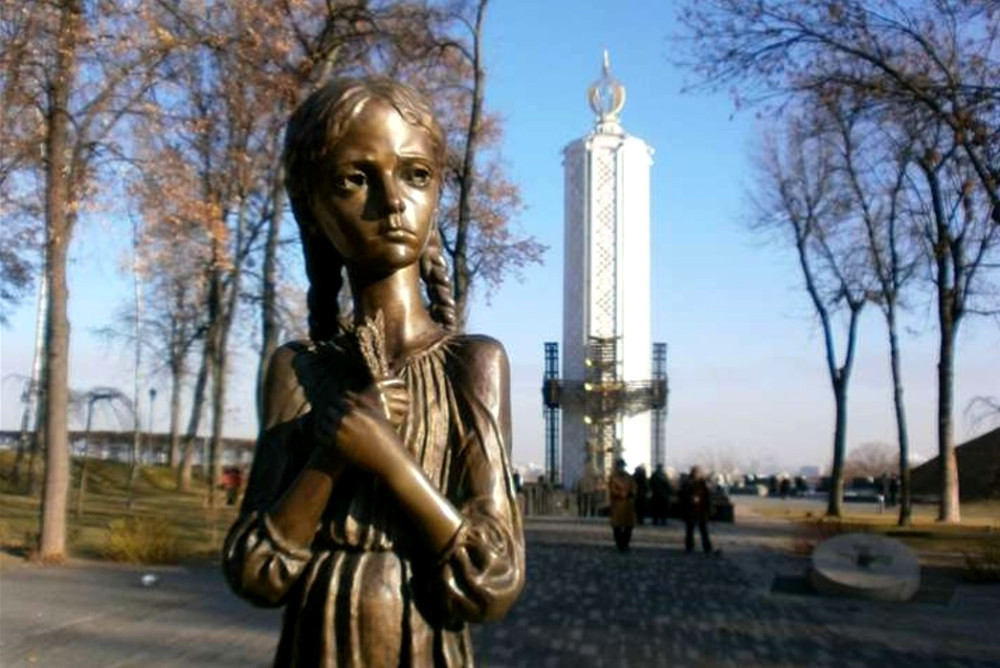


On Saturday, November 22, Ukraine honors the memory of those who perished in the Holodomor.
This day of remembrance is observed annually on the fourth Saturday of November based on presidential decrees from 1998 and 2007.
Throughout the 20th century, Ukrainians endured three famines: 1921-1923, 1932-1933, and 1946-1947. The most tragic was the famine of 1932-1933, recognized as the genocide of the Ukrainian people perpetrated by the Stalinist regime.
Preceding the Holodomor was the brutal collectivization of agriculture, the "dekulakization" of peasants, and mass terror. For 22 months, a policy of terror was enacted in Ukraine aimed at the destruction of the Ukrainian peasantry.
Peasants became victims of total repression that also targeted intelligentsia and clergy.
The famine in Ukraine was influenced by several factors. Notably, on November 18, 1932, the Central Committee of the Communist Party of Ukraine issued a decree "On Measures to Strengthen Grain Procurement," which mandated punishments for failing to meet grain collection quotas. Peasant farms faced "natural penalties" including confiscation of meat.
On November 26, 1932, a decree emphasized that "repression is one of the powerful tools to overcome class resistance to grain procurement." Thus, the artificially created famine became a well-planned punitive operation.
Initially, peasants had their harvested grain confiscated, and later, through numerous "natural penalties" and raids, they were stripped of their last food reserves. In December 1932, trading in food was banned in 82 regions of Ukraine, and the supply of industrial goods ceased.
By early 1933, peasants lost their last hopes for salvation as leaving the famine-stricken Ukraine was prohibited. Left without bread, peasant families resorted to consuming various substitutes, such as corn cobs, sifted husks, spoiled vegetables.
The terror of famine lasted for 22 months and officially claimed about 4 million lives.
For decades, the topic of the Holodomor was taboo. It was strictly forbidden to discuss the famine of those years under the communist regime. Research into this tragedy began only in the late 1980s.
According to the Law "On the Holodomor of 1932-1933 in Ukraine," adopted on November 28, 2006, the famine of 1932-1933 is recognized as an act of genocide against the Ukrainian people.
On January 13, 2010, a ruling from the Kyiv Court of Appeals recognized Soviet leaders as guilty of organizing the Holodomor in Ukraine.
As of now, 29 countries have recognized the Holodomor of 1932-1933 as genocide against the Ukrainian people, along with international organizations such as PACE and the European Parliament.
Today, over 90 years after the tragedy, Russia continues attempts to erase Ukraine from the world map, destroy the Ukrainian people, culture, language, and history.
Traditionally, on this day, Ukrainians light candles in memory of those who perished from the artificial famine. Additionally, a nationwide moment of silence will take place at 4:00 PM.