
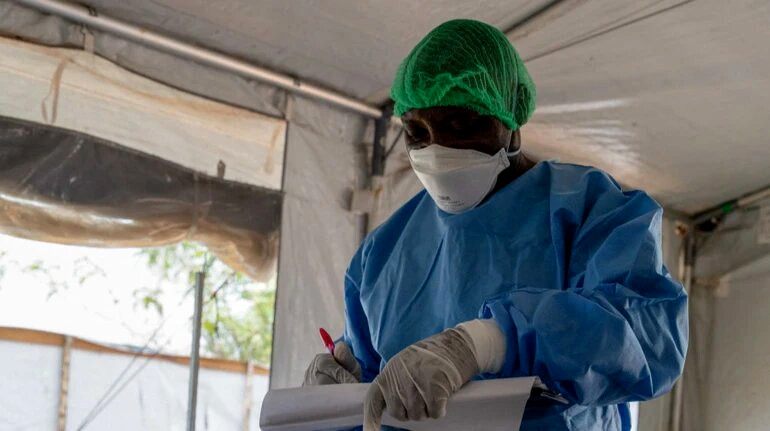
The World Health Organization (WHO) suspects that an unknown disease affecting over a thousand people in Congo may be linked to contaminated water sources.
At least 60 locals from the Equateur province have died from the illness, reports CNN.
During an online briefing, Michael Ryan, head of the emergency agency, stated there is a "strong suspicion of poisoning related to water source contamination" in one of the affected areas. However, he noted that it is too early to draw definitive conclusions.
The WHO representative did not clarify whether the contamination was accidental or deliberate. Another possible cause could be "toxic events" or "chemical exposure".
According to Ryan, high rates of malaria and other diseases in the region complicate the identification of the outbreak's cause.
"We will not stop our investigation until we are certain that the true cause of what is happening here is fully understood", Ryan added.
It is worth noting that the unknown disease was first identified in late January in the settlement of Boloko following the death of three children who consumed a bat. In total, twelve cases of the unknown disease and eight deaths have been reported, according to local officials.
Nearly half of the fatalities occurred within hours of symptom onset.
Symptoms observed in patients resemble those of malaria, including:
- fever;
- body aches;
- chills;
- sweating;
- neck stiffness;
- runny nose or nosebleeds;
- cough;
- vomiting;
- diarrhea.
The village of Bomate, located about 200 kilometers from Boloko, has been the hardest hit, accounting for 98% of infections and 85% of deaths.
Previously, medical professionals collected biological samples from 13 patients for analysis at the National Institute of Biomedical Research in Kinshasa.
The WHO reported that the samples did not confirm Ebola fever or other common hemorrhagic diseases, but malaria, which is prevalent in the region, was found in hundreds of patients.