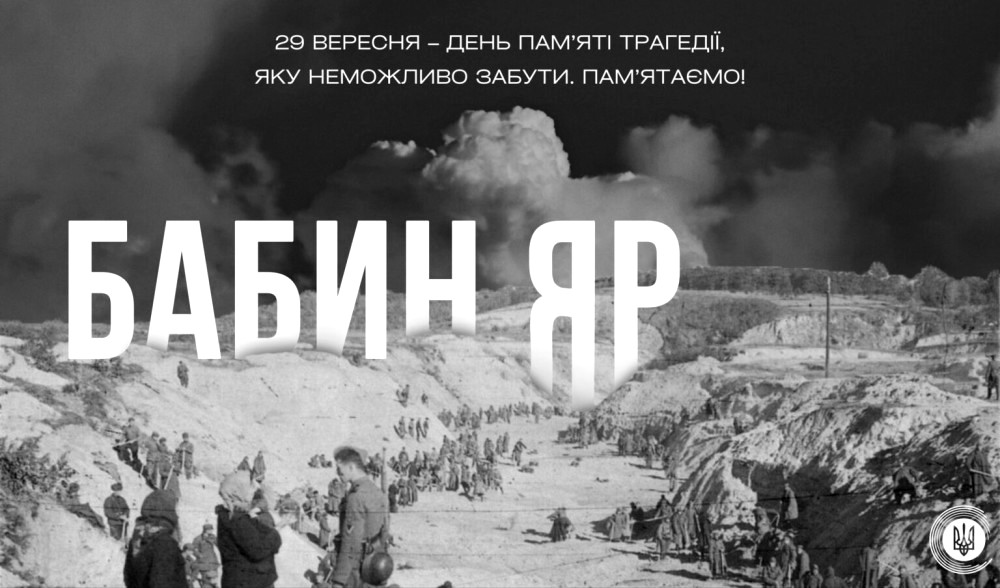


On September 29, Ukraine honors the memory of those who perished in the Babyn Yar tragedy, a grim symbol of the Holocaust.
In 1941, over the course of September 29-30, the Nazis conducted the first mass execution of unarmed civilians in occupied Kyiv.
From September 29 to October 11, 1941, the SS killed nearly the entire Jewish population of the city — over 50,000 men, women, and children. In the first two days, approximately 34,000 individuals were murdered, and an additional 17,000 were executed on October 1, 2, 8, and 11.
The site chosen for these mass executions was Babyn Yar — a ravine located in the northwest of Kyiv, measuring two and a half kilometers in length and reaching depths of up to 50 meters. At the entrance, gates were set up to allow groups of 30-40 people to enter. They were forced to undress and had their personal belongings confiscated before being herded to the edges of the ravine where machine gunners awaited them. Once the ravine was filled with layers of bodies, they were covered with earth.
During World War II, estimates suggest that between 100,000 and 150,000 people were killed at Babyn Yar — including Jews, Roma, Karaites, Soviet prisoners of war, participants of the Ukrainian nationalist resistance movement, psychiatric patients, and members of other national or social groups deemed “excess” by the occupiers.