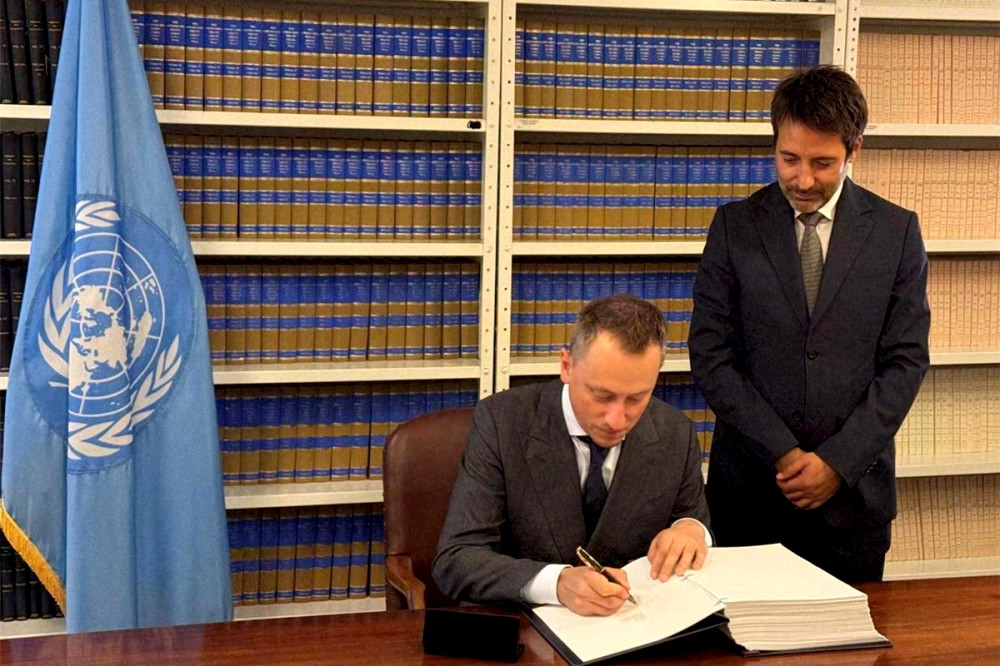


The Minister of Economy, Environment, and Agriculture of Ukraine, Oleksii Sobolev, signed the High Seas Agreement (BBNJ Agreement) at the UN headquarters in New York, which will enhance international environmental cooperation.
This is reported by the Ministry of Economy.
With this document, Ukraine has become part of a new international mechanism aimed at protecting oceanic ecosystems and sustainably managing marine resources in international waters.
Based on the Presidential Order of Ukraine dated August 28, 2025, Oleksii Sobolev was authorized to sign the document within the framework of the UN Convention on the Law of the Sea.
«This agreement marks another significant step towards Ukraine's European future. We affirm that the preservation of oceans and seas is integral to our European and global ecological integration. Our location on the Black and Azov Seas makes issues of maritime security and ecosystem protection strategically important for both the country and the region. Even in times of war, we demonstrate our capacity to care for the global environment, combat climate challenges, and fight against the ecological crimes of the aggressor», Sobolev emphasized.
The document contributes to the objectives of the Convention on Biological Diversity, which aims to protect 30% of ocean areas and territories by 2030, and aligns with the Paris Climate Agreement concerning discussions on Blue Carbon – carbon absorbed by marine ecosystems.
The agreement also allows Ukraine to participate in shaping international maritime policy and to draw global attention to the negative impact of Russia on the environment of Crimea and the Black Sea.
The High Seas Agreement was adopted in 2023 and is the third implementation agreement under the UN Convention on the Law of the Sea (UNCLOS). Its goal is to create unified global rules for biodiversity protection across areas covering two-thirds of the world's oceans.
So far, 140 countries have signed the agreement, 54 of which have ratified it in their national jurisdictions. Within 120 days from the signing, all countries must complete the ratification process, after which the document will come into effect.