

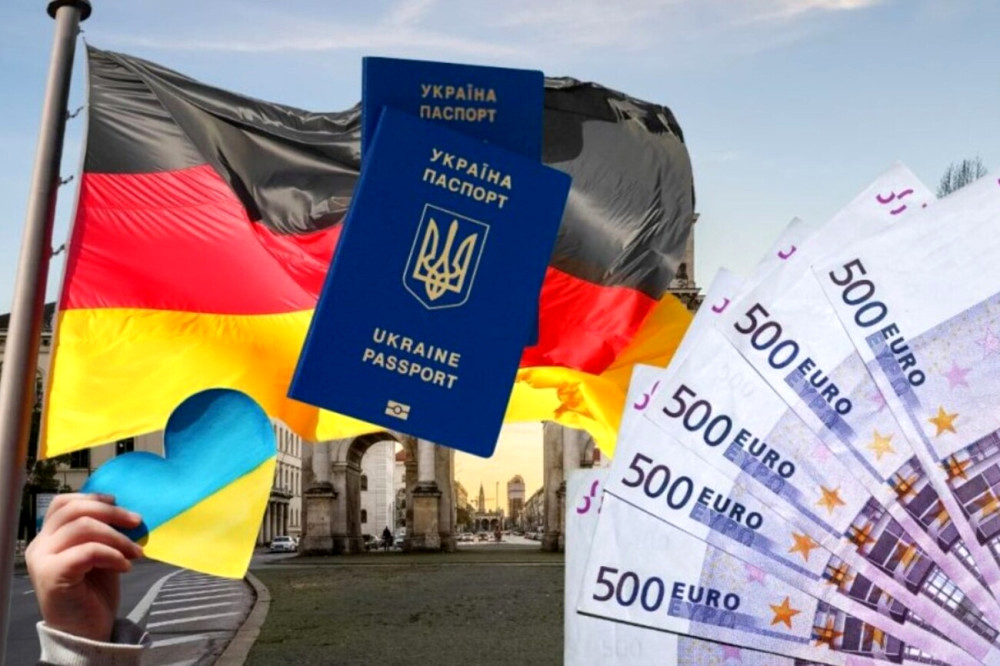
Ukrainians arriving in Germany after April 1, 2025, will no longer be eligible for the "bürgergeld," a financial aid provided to job seekers or those with insufficient income.
The information was reported by Bild, citing an agreement within the governing coalition.
According to the new terms, all Ukrainians arriving after the specified date will be classified as asylum seekers and will consequently receive lower social benefits.
This marks the end of the special status for refugees from Ukraine that has lasted for nearly four years.
Initially, there were plans to retroactively remove social benefits for Ukrainians, but local authorities opposed this due to the complexity of implementation.
A coalition member stated: "The bureaucratic burden would be too great, local authorities would rebel - it’s not worth the effort. What matters is that we resolved this matter."
Currently, there are 1.1 million Ukrainians living in Germany, receiving 563 euros per month as basic assistance. The state also covers housing, heating, and other expenses. In contrast, the asylum seeker assistance law provides only 441 euros per month.
The CDU/CSU and SPD agreed on changes to their coalition agreement as a relatively small number of Ukrainians are employed in Germany.
There is hope that the new agreement will encourage more Ukrainians to seek employment.
In September 2025, the EU countries made the highest number of decisions on granting temporary protection to Ukrainians since 2023, potentially linked to the opening of borders for young men aged 18-22.
Research indicates that over half of Ukrainians with temporary protection are not very satisfied with their lives in Germany.
