

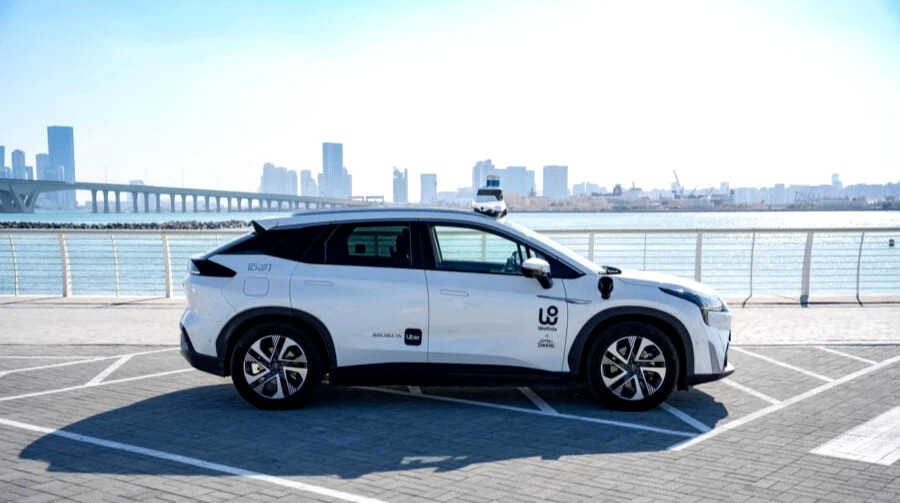
China is anticipating the deployment of at least 300,000 self-driving taxis in major cities like Beijing, Shanghai, Guangzhou, and Shenzhen by 2030, as reported by SCMP.
Paul Gong, the automotive research head at UBS, believes that autonomous taxis could generate up to $183 billion annually in mainland China, provided that all taxis and ride-hailing vehicles are replaced with self-driving options.
Gong has not specified when the commercialization of robotaxis will begin, citing regulatory frameworks and consumer acceptance as key factors. However, HSBC recently asserted that robotaxis could account for 6% of China's taxi market, potentially generating $40 billion per year, although a timeline for this prediction remains unclear.
In addition to passenger transport, autonomous taxis are projected to bring in another $30 billion annually through delivery services. Gong notes that the decreasing production costs of electric vehicles with autonomous driving technology, expected to drop to around 300,000 yuan (~$41,935), will further support this growth.
Currently, trials for autonomous taxis are being conducted in cities like Beijing, Shanghai, Guangzhou, and Shenzhen by companies such as Apollo, Pony.ai, and WeRide. Although only a handful of vehicles have been launched so far, there is a strong focus on affordable fares, with some rides costing just 10% of a standard taxi fare.
Apollo, a subsidiary of Baidu, operates the largest fleet, with hundreds of self-driving vehicles in Wuhan that can service approximately 35% of the city's roads, indicating significant availability for autonomous transport.
Pony.ai is also preparing for large-scale production of self-driving taxis, aiming to make their services more accessible and cost-effective thanks to advancements in technology.
