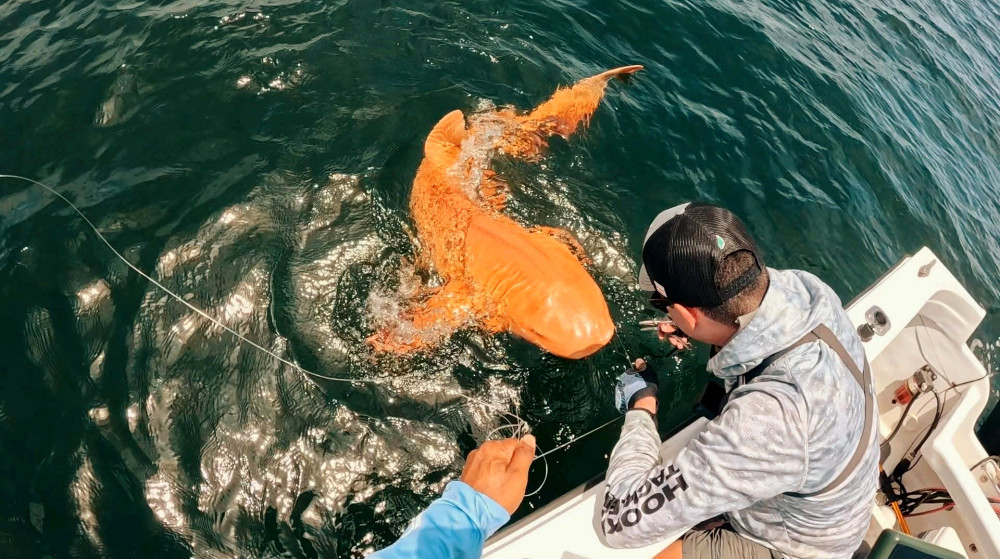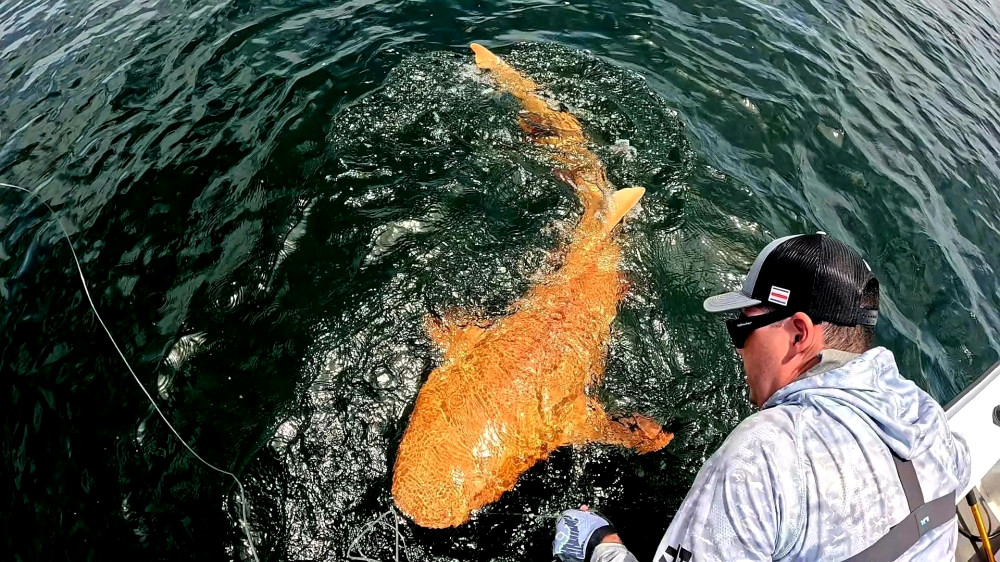


An exceptionally bright orange nurse shark (Ginglymostoma cirratum) has been observed for the first time in the Caribbean Sea near Costa Rica.
This individual, showcasing its rare pigmentation, was caught during a sport fishing trip close to Tortuguero National Park, as reported by IFL Science.
The shark was located at a depth of 37 meters, measuring about two meters long and exhibiting a striking yellow-orange skin. After documenting the sighting, the researchers released the animal back into the ocean, and they described the finding in the journal Marine Biodiversity.
Researchers suggest that this pigmentation is indicative of xanthochromism – a rare genetic condition that results in an excess of yellow-orange hues in the skin, fur, or feathers of animals.
This phenomenon is similar to melanism (where the coloration is entirely black) or albinism, but occurs far less frequently. This case of xanthochromism is the first documented instance among fish in the Caribbean region and specifically among nurse sharks.
In nature, this genetic trait can reduce survival chances, as the bright coloration makes animals more visible to predators.
However, this risky coloration has not prevented this shark from reaching maturity. Additionally, its size indicates that it has successfully adapted to its environment.
Besides its unusual color, the shark had white eyes without visible irises instead of the typical black ones. This may indicate a rare case of albino-xanthochromism.
Scientists believe that various factors may have influenced the pigmentation: inbreeding, environmental stress, elevated temperatures, or hormonal imbalances. Further studies on the genetic variability of nurse sharks and the conditions in the northern Caribbean will help elucidate this phenomenon.